Showing posts with label books. Show all posts

Tuesday, July 28, 2026

The Library

I loved the library in the town where I grew up. It was housed in a quirky little building with shiny wooden floors and steps down to the children’s section. The place smelt wonderfully of polished wood and was full of more books than I would ever be able to read. I could choose any book I wanted to, without having to think about whether I would be allowed to buy it. So I discovered stories that I would never have otherwise found, stories that still sit in my memory now, though I’ve forgotten the details. A story of children growing up in the stone age; a story of a boy with epilepsy discovering a bond with nature and many others. It was also here that one day I was surprised by a fellow pupil from my school slithering under the book cases and grabbing my ankles!

When I was a teenager, the library started stocking music, which gave an extra dimension to my borrowing. Now I could randomly select music and listen, without actually buying the albums! A great way to broaden my musical horizons.

I pass the library every time I visit the town where I grew up. The building now houses a motor-cycle showroom. The library itself is now up in the town centre, in the same building as the medical centre. I’ve never visited it there, it just wouldn’t be the same, though I’m sure it offers the same expanded horizons to today’s children as the old library did for me.

**

Originally published as part of the CILIPS (Chartered Institute of Library and Information Professionals) 2022 #LibrariesareEssential campaign. You can find all the creative responses to their campaign on their website here!  

Sunday, November 06, 2022

Three Thrillers from Northodox Publishing

 1621179837.png

Her Sister's Shadow by Catherine Wimpeney

Greater Manchester DCI Kay Harris is haunted by the memory of her sister's recent suicide. Concerned for her mental health, her superiors  push her into taking some time off. Kay retreats to her family's holiday home in the Scottish Highlands, taking with her, Ava, a young woman she prevented from committing suicide. 

Wimpeney is a former mental health nurse and qualified psychotherapist, and used her experience in writing this thriller. The subject matter is fairly heavy, including issues around expectations of women in the workplace, bullying at work, mental health support and trauma recovery, but the book is lightened by a good sense of humour.

As a birdwatcher, I liked the frequent bird based similes that Kay used to describe things, eg "Their phones rang intermittently, like robins marking territories". I was disappointed that this disappeared from the book quite quickly, though perhaps that was a deliberate attempt to add to the sense of Kay's deteriorating mental health. 

It's an engrossing read, though slightly uneven (and perhaps could have done with better editing). Definitely worth reading if you're interested in the issues.

Her Sister's Shadow by Catherine Wimpeney,

**

 1631356049.png

 The Girl Beneath the Ice by Joseph Darlington  

School pupil Tasha Barcroft is found frozen in a river in the middle of a very cold winter. It falls to Inspector Dafydd Todor to find out how she died. 

This story focuses on different people in Tasha's life, including her boyfriend Lucas, schoolgirl Frigg who had been bullied by Tasha, Mrs Barcroft, Tasha's grandmother. Did any of these people have motive to kill Tasha or was it in fact Todd, the recluse who lives in a makeshift home in the forest while apparently being employed as a ranger (though he seems to not even know whether he really has a job, making him pretty unbelievable as a character)?

The winter setting is very effectively conveyed through description of the weather and landscape and the book is a real page turner, the reader definitely wants to know what happens next. However, there seemed to be inconsistencies in the plot and in the understanding of the physics of frozen rivers. 

Worth a read if you like thrillers set in winter. 

The Girl Beneath the Ice by Joseph Darlington. Under the Bridge - Paperback

Under the Bridge by Jack Byrne

The year is 2004, a body has been discovered in the Liverpool Docklands. Anne McCarthy, a new reporter on a local newspaper, is keen to investigate the case and finds that she has let herself in for more than she bargained for. 

The body dates back to the 1970s, a time of industrial strife and smuggling. 

By getting involved in the investigations, Anne uncovers hidden histories and secrets and the lives of the Wicklow Boys, a group of men smuggling contraband into the docks. Meanwhile, Anne's friend Vinny, who is starting a research project into what makes up the Liverpudlian identity, starts to question what he knows about hos own family history.

This is a thoroughly researched, tautly written thriller bringing in the history of Irish immigration into Liverpool and questions around Liverpudlian identity, while telling an excellent story.

Under the Bridge by Jack Byrne.

You can read my review of Airedale by Dylan Byford (also published by Northodox) on my Crafty Green Poet blog here.


All four books published (2021) by Northodox Press, a publishing company committed to books from the north of England.  

**

Disclaimer: I won these books in a competition on Twitter. 


Tuesday, July 09, 2019

New Testimonials: The Bi-Ble Volume 2 (essays on bisexuality)

 bible vol 2_3D cover.png
New Testimonials: The Bi-Ble Volume 2 is a stand alone follow up to The Bi-ble Anthology of Personal Narratives and Essays about Bisexuality (which I reviewed here). It contains a range of new essays on various aspects of the bisexual experience, from writers from across the UK and overseas.

These essays and personal stories about bisexuality come from a variety of viewpoints and covering topics including bi-erasure, race and sexuality, disability, and popular culture (including Flash Gordon, St Vincent and Janelle Monae). There's nothing however about goths and bisexuality (and nor was there in the first volume), which seems like an area that could be explored in an essay.

The pieces are well written and interesting, sometimes amusing and often moving. Some are very much personal narratives and some are definitely essays, some of them quite academic in style (but always accessible to the general reader) Whether you're bisexual, questioning, or just curious, this collection will open you to new perspectives. There isn't a lot of bisexual literature out there and the two volumes of the Bi-Ble help to fill that gap.

The Bi-Ble volumes 1 and 2 are available to buy together or separately from Monstrous Regiment, a great new feminist independent press based in Edinburgh. You can visit their online shop here.

New Testimonials will be launched at an event in Edinburgh on Friday 19 July, find out more and book your place here. 

Monday, June 17, 2019

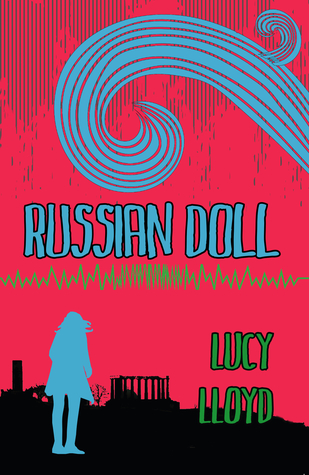
Russian Doll by Lucy Lloyd

Russian Doll


Set in the near future and originally published as Shotlandiya on Kindle this is an intriguing novel about a Russian take over of a newly independent Scotland, starting with their annexing the island of Rockall.

Anna works for the newly independent Scottish Broadcasting Corporation producing radio programmes, and struggles to remain true to herself as Russian managers and staff start taking over the studios.

She finds herself becoming closer to Grigory, a Russian diplomat who is overseeing Scottish-Russian media relations and struggles against their growing mutual attraction. 


This is an excellent novel, the characters are believable and complex and the narrative moves along well with escalating tension and intrigue. I was very impressed by the way that the censorship and control by the Russians was depicted, starting as something quite subtle and increasing slowly until they were controlling basically all the station's output. It's moving and amusing as well as thought provoking. 


Russian Doll by Lucy Lloyd, published (2018) by Comely Bank Publishing.

Wednesday, September 26, 2018

Women in the Archives

Yesterday I attended a very interesting panel event at the National Library of Scotland about women in literary archives.

Attention has traditionally focused on the writings of male (usually white) authors, and this event sought to question this focus by considering the relationship between archives and literary reputations. The speakers focussed on individual authors to address how the relative absence of women writers from official archives has contributed to their relative scarcity in the literary canon and to explore the relationship between a writer’s archive and their literary status.

Jenni Calder spoke about Scottish poet, botanist and plant collector Isobel Hutchison and her travels in the 1930s in Alaska. I was particularly interested to hear about Hutchison since I had recently read Andrea Wulf's fascinating book The Brother Gardeners (which I briefly reviewed over on Crafty Green Poet here).

Donna Campbell of Washington State University then spoke about the various cinematic and theatrical adaptations that have been made from the novels of Edith Wharton and how they were received by audiences compared to the novels themselves (audiences of an early adaptation of The House of Mirth for instance were unhappy with the death of Lily Bart at the end of the play, though they apparently had had no problem with that as the ending of the novel, I think that's still the case today to some degree).

After a short break Imaobong Umoren talked about the invisibility of black women in the archives, focussing on the life and work of Una Marson who moved from Jamaica to the United Kingdom to further her literary career but struggled to find work due to racism. She was a poet, playwright and the first black woman employed by the BBC.

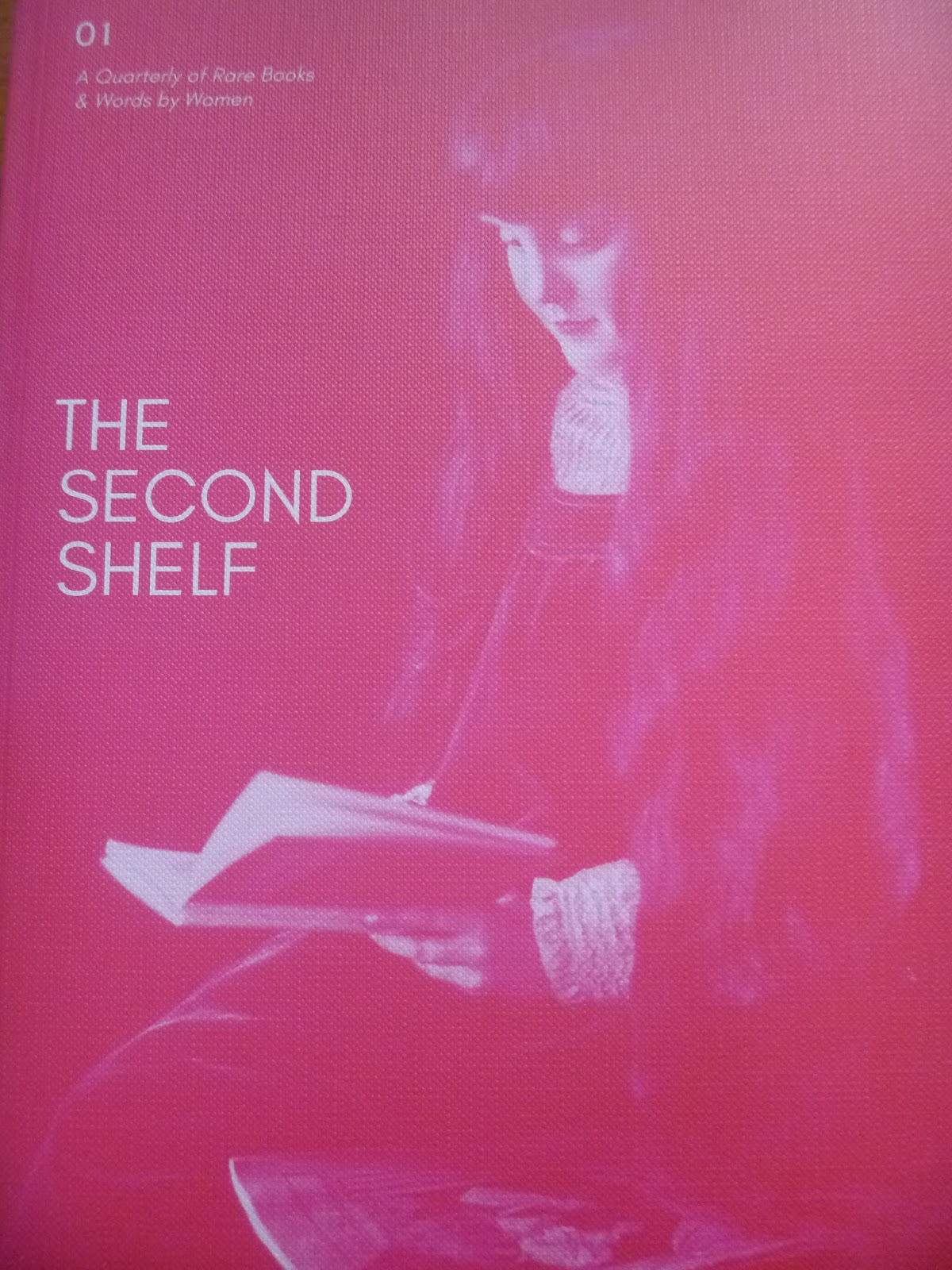
Finally A N Deevers introduced her new business, The Second Shelf, a rare book dealership (soon to open up a shop in London) which aims to redress the balance between female and male writers in the rare books trade. She produces a beautiful journal that doubles as a catalogue (but is so much more than a catalogue and looks like a great read!) and is approaching the whole enterprise with an inspiring mix of imagination and determination.


This event was a collaboration between Transatlantic Literary Women and the National Library of Scotland.

Wednesday, March 30, 2016

If You had a SuperPower what would it be? by Christopher Holley

This is the latest children's book from Christopher Holley, this time illustrated by Kabita Studios.

The first half of the book asks, in entertaining rhyme, what superpower would you choose, for example:

Would you dare to climb buildings with no safety net?
Have nice cozy chats with your family pet?


Once the reader has thought about which wacky, impressive superpowers he or she might want then the book turns to reality and points out that actually, you don't need a superpower at all, you can change the world around you just as you are, starting with small, but meaningful actions, for example:

When a new kid arrives from someplace out of town
 Say "hello there!" and offer to show them around.

So this is a fun, entertaining and useful book to help children realise that they can be valuable members of society.

If You Had a Super Power What Would it be? by Christopher Holley, illustrated by Kabita Studios.

You can read my other recent reviews of books by Christopher Holley by following the links below:

The Moustache Fairy.


Chumbalina the Plump Princess.

A World Without Water.

 Disclaimer, I was sent free e-copies of these books to review. 

 As ever, coloured text contains hyperlinks that take you to other webpages where you can find out more.

Wednesday, March 09, 2016

The Moustache Fairy


Everywhere he goes Alvin is teased, bullied and discriminated against because he doesn't have a moustache. School history lessons focus on the history of moustaches, fairground rides ban people from riding if their beards aren't bushy enough and his sister Alice teases him mercilessly.

Alvin tries desperately to fit in:

'He wanted a moustache so badly he was willing to do anything for one.  His first attempt was a simple solution. He drew one on with magic marker. There was nothing magical about it'

Alvin finally contacts the Moustache Fairy who agrees to help but has run out of moustache magic! Will Alice step in to help the fairy solve her brother's problems?

This is an entertaining tale of one boy's attempts to fit in. It's also a story about wanting to be grown up and being in that stage where you think you're behind your friends in terms of becoming an adult. 

The Moustache Fairy by Christopher Holley, illustrated by Kabita Studios

You can read my earlier reviews of Christopher Holley's Children's books by following the links below:

Chumbalina the Plump Princess.

A World Without Water.

 Disclaimer, I was sent free e-copies of these books to review. 

 As ever, coloured text contains hyperlinks that take you to other webpages where you can find out more.

Wednesday, March 02, 2016

Chumbalina the Plump Princess by Christopher Holley


'Chumbalina was not like the other princesses. 

She did not care for looking beautiful. Nor did she want to fall in love with a handsome prince and live happily ever after.'

Chumbalina also loves to eat sweets and cakes and as a result she is plump. This is not considered a suitable trait in a princess so she is shunned by all the other princesses and her only friend is her plump grey cat.

When her father bans sweets from the kingdom in an attempt to try to make Chumbalina lose weight, she leaves home and runs away to the forest where sweeties grow on trees.

Meanwhile an ogre attacks the kingdom and Chumbalina rushes back home to challenge the giant to an eating contest. Will she be able to defeat the enemy? Will she be able to win friends by her efforts? Will she learn to love vegetables?

This is a fun read, with lively illustrations full of details that add to the written narrative. It's a great book for showing children that everyone matters and that everyone has talents that make them special.


Chumbalina the Plump Princess by Christopher Holley, illustrated by Giedre Seniuniene

**

I recently reviewed Christopher Holley's book A World Without Water over on my Crafty Green Poet blog here.  

 Disclaimer, I was sent free e-copies of these books to review.

As ever, coloured text contains hyperlinks that take you to other webpages where you can find out more.

Thursday, November 12, 2015

My Riastrad by Kevin Hogan


In this collection, Hogan muses on topics including relationships, gay and bisexual identity, loneliness and ageing. It also includes a poem about shovelling snow and A Lovelier World in which a dog that

has never caught more
than tennis balls

dreams about 'furrier prey'.

Hogan offers occasional sharp insights as when he meditates on night terrors in Off My Chest

I would rather 
see the demons
than suddenly awaken 
one day blind

He has skill with rhymes  as here in Oh, Wicked One
 
On the day I should have drowned 
in the ocean's lost and found 

(though on some occasions it feels as though lines are distorted somewhat by the rhyme.

I particularly liked Hogan's ability to make interesting connections as in Fitting Room when confusion over the labelling of clothing sizes leads on to thinking about the labels he has endured as a bisexual man.  Even more unexpected a connection is made in Party Split Ends when shampoo and conditioner are compared to opposing political parties.

And the title? Riastrad is the Irish Gaelic term for battle frenzy. You can certainly sense rebellion coursing through much of this book, and well channelled into verse.

My Riastrad by Kevin Hogan, can be purchased here.


Sunday, October 04, 2015

Elizabeth is Missing by Emma Healy

Maud has dementia and struggles to remember things, but she does know that her friend Elizabeth is missing. She struggles to get other people to believe her and is constantly frustrated in her search for her friend by her own inability to organise her thoughts.

Interwoven with Maud's attempts to find out what has happened to Elizabeth are her memories of her childhood, specifically of the time when her sister Sukey went missing. The two narratives play against each other in enlightening and thought provoking ways.

As well as being an excellent crime novel with a convincing unreliable narrator, this is a beautifully written, moving exploration of memory and family connections that convincingly details Maud's decline in her memory and abilities. A heartbreaking book.

Elizabeth is Missing by Emma Healy published by Penguin

Monday, August 31, 2015

The Ball's in Your Court - Learning a Foreign Language e-book


This short guide is intended to inspire and direct your language learning. Covering topics including learning styles, the origin of languages and the importance of learning about culture alongside language, this is an energising read for anyone learning or thinking of learning a language.

The book usefully helps the reader to identify and overcome their own barriers to language learning, whether lack of self confidence or difficulties with hearing spoken languages. It also helps you decide whether you would be better learning in a classroom (and if so, how to find a good teacher) or by yourself with books and tapes and how much time you can afford to devote to your studies. It goes into some detail on selecting learning materials (including recommending some individual programmes. It also offers some useful techniques for learning and using a foreign language - including circumlocution (rephrasing what you want to say to avoid coming up against words you don't know) It offers suggestions for how to build up your fluency, including suggesting reading a magazine of interest to you (for example, I read the Italian version of Focus magazine, which not only helps me develop my understanding of Italian but also gives me plenty of genuinely interesting articles, many of which are about science.)

The Ball in the title of the book, refers to BALL, an acronym gor Brain Activated Language Learning.

Though by the end of this book you won't have learnt a new language, you will have your mind thinking about how best to go about it. Which is a very important place to start.

The Ball's in Your Court - Learning a Foreign Language by Aurelia McNeil is available here. 

Disclaimer  - I recieved a free review copy of this e-book. 

Friday, August 14, 2015

The Shoeshine Killer by Marianne Wheelaghan

At the opening of The Shoeshine Killer, Detective Sargeant Louisa Townsend (who we first met in Food of Ghosts which I reviewed here) arrives in Fiji to attend a conference on money laundering, just as a military coup is announced.

The coup means that Louisa can't stay in the conference hotel so she ends up staying in a small bed and breakfast, where she quickly makes friends with the owner. Unfortunately the owner is soon killed and rather than being a conference attendee, Louisa finds herself faced with a murder to investigate, if only the local police would let her help them, or perhaps they think she's a suspect?

Meanwhile what about the shoeshine boys, who live all together in a communal house and are overseen by a domineering boss. What is their connection with the bed and breakfast owner? Do they know anything about the murder?


Louisa is a very well-drawn, realistic character, grumpy, impulsive and obsessively clean. She's not entirely likeable but the reader can't help but be on her side, as she's so very human in all her failings and we very much feel for her as she struggles against her difficulties. It must take a lot of determination to face eating from a communal pot let along coming across a murder scene when you're obsessive about cleanliness and tidiness.


Throw in a corrupt church minister and local opposition to plans to build a gay holiday resort and there's a lot to keep the reader's attention in this story. 

The Shoeshine Killer by Marianne Wheelaghan, is available to buy for Kindle here.

As ever, coloured text contains hyperlinks which take you to other webpages where you can find out more.

Sunday, February 01, 2015

My Stroke of Insight by Jill Bolte Taylor

This is a must read book for anyone who has had a stroke, needs to care for someone who has had a stroke and particularly for anyone who works in the medical profession. Actually it's a must read book for anyone with a brain.

Bolte Taylor is a brain scientist, At the age of 37, she experienced a rare form of stroke that left her so disabled that she could not walk, talk, read, write or recall any of her life. This book gives an account of how she observed her brain deteriorate during the stroke and how she (with the assistance of her mother and medical professionals) helped her brain to heal, to eventually, after 8 years, make a complete recovery. 

Her stroke occured in the left hand side of her brain so she lost her language and mathematical abilities and found herself in a state of 'feeling at one with the universe' as her right brain took over. From this 'euphoric nirvana' she had to bring her left brain back into action. It is incredibly inspiring to read how she did this! Obviously her training in neuroscience meant that she was able to be much more informed and helpfully analytical about her brain than most people would be, but her insights are helpful for everyone, whether recovering from a stroke, helping someone else who has had a stroke or just in terms of interest about your future brain health. 

Before telling her own story, Bolte Taylor outlines some brain science and at the end of the book she outlines practical things that people who have suffered strokes need to help them make a full recovery. Plus she gives advice on how to be kind to your brain and how to maximise the value of both sides of your brain. These parts of the book would be particularly useful for people in the medical profession to help ensure that the best possible care is given to people who have had a stroke.

As well as being helpful and practical though, this is a totally inspiring story about how someone can recover from a major stroke and live the life they want to live, though it does get irritatingly new-agey in parts. In Bolte Taylor's case that is educating people about their brains and creating, anatomically correct stained glass brains.

(This is a book that seems to inspire very different reactions in its readers, as you can tell if you read the reviews on Good Reads).

My Stroke of Insight by Jill Bolte Taylor published by Hodder.


Thursday, January 08, 2015

The Sun Breaks Through


I was delighted today when a copy of The Sun Breaks Through arrived on my door mat. This is the long awaited anthology of writing from the Write On Course (based at the Ripple Project in Lochend). I currently teach the Write On Course and was delighted to edit this anthology that contains wonderful poetry and short stories from class members.

A Bit of a Breeze by Dot Stuart follows an autumn leaf as it floats above Edinburgh to finally land in the Lochend Community Garden.

In The Most Amazing Thing Happened Kathleen Byron shows us how the tar sands of Canada affect the surrounding communities

We meet an unusual and melancholy character in Louise Bankhead's The Wooden Peg

St Jane is a poem from Elaine Pomeransky about a Scottish nurse who died in Auschwitz

Margaret Bruce tells us the story of a missing person in I Was Alarmed

[at falling tide on islay] is an atmospheric poem from Louise Bankhead

Everything is not quite as it seems in Kathleen Byron's Where Did You Hide the Body?

The Trams are just the starting point for Dot Stuart's story of reminiscences

and finally Lindsay Oliver shares a story I Love Leith.

The anthology is available from the Ripple Project and costs £3 if you buy it in person or £4 (including postage and packing) if you order it by post from an address within the UK. For overseas orders, please contact the Ripple Project for information on postage rates. The Ripple Project contact details are on their website.

As ever, red text contains hyperlinks that take you to other webpages where you can find out more. 

Tuesday, October 14, 2014

The Interrogative Mood by Padgett Powell

Would you be drawn to a book that had a picture of a man wrestling with a question mark on the cover? Have you ever read a novel written entirely in the form of questions? How do you think you would feel reading a book written entirely in this form? Would you read this sort of novel quicker or slower than a regular novel? Do you think you would try to answer each question in the text before moving on to the next one? Do you think you would enjoy a novel that includes the following extract?

Are you a sweater person? Do you suppose it's the case that damming some rivers is not an ecological hazard but damning others is? So you picture the days of the week on a calendar in your mind?

Do you think that in a book written entirely as questions that some of the questions would seem rather tortuous and meandering? Would you read them anyway? Do you think reading this kind of novel would annoy you or stimulate your mind?

Do you think I might be recommending this book to you?

The Interrogative Mood by Padgett Powell, published by Profile Books

Tuesday, September 16, 2014

Jutland to Junkyard by S C George

When we last visited one of Crafty Green Boyfriend's aunts, she had just come back from a holiday touring some of the Scottish Islands. While talking about Orkney, she told us how she knew someone who had made his fortune from salvaging the German navy ships drowned  at Scapa Flow. (All of us have seen the remaining ships that stand as memorials in Scapa Flow to this day and our aunt used to live in Rosyth where the metal from the ships was ultimately salvaged).

Later that afternoon, in a second hand shop, I found this book, which is the story of how those very navy ships were salvaged. It seemed such a wonderfully serendipitous finding that I immediately bought the book and will have finished reading it by the next time we see this aunt and I'll give it to her as a gift!

In May 1916 the German Navy surrendered after the battle of Jutland. Their boats were towed all the way to Scapa Flow, in the Orkney Islands, to the north of Scotland, which was the base for the British fleet. On 21 June 1919, the German navy scuttled (deliberately sank) their ships. At first the British Admirality left them there but eventually (due to the ships causing obstructions in the shipping channels and a lack of scrap metals) the ships were brought up from the sea floor and towed to the shipyards at Rosyth, in Fife where the metals were salvaged.

The bulk of the book looks at how each individual ship was salvaged, often with quite a lot of technical detail. There are some fascinating stories woven into the overall narrative

"Next day Hindenburg was beached in Mill Bay. Mrs McKenzie, wife of the salvage officer, found the crow's nest of the ship a delightful place to occupy for her reading and knitting"

The salvage was a long, painstaking process that lasted years and resulted in the loss of several lives.
A fascinating part of history, which I had only been vaguely aware of.


Jutland to Junkyard by S C George published by Birlinn.

Friday, August 29, 2014

The Adventure of English by Melvyn Bragg

Subtitled the Biography of a Language, this brilliant book traces the development of the English language from it's earliest days as a dialect of an obscure tribe in northern Europe to its current day status as global language.

Bragg is excellent at weaving the history of the language in with all the strands of history around it. He traces for example how English more or less went into hiding during the French speaking days after the Norman conquest and how the adventurous nature of the American Wild West lead to an adventurous period of development in the English language. He explores how the use of English changed church history in the British Isles and how Shakespeare changed the language forever.

He looks at different Englishes spoken throughout the world, including Australian English, Indian English and American Englishes as well as the pidgins and creoles that have developed particularly against a background of slavery where people with various different native languages would try to create something mutually comprehensible from a common (though poorly known) language. Also the way that English has affected the other languages it has come into contact with.

I felt the book cound have benefited from a section about the forms of English spoken in Africa and that in general most sections of the book could have been extended. I just found it totally fascinating and wanted to find out even more about this amazing language we speak! 

So anyone who's interested in the English language, how it's developed and ow it fits into the general history of the English speaking world, should read this book.

The Adventure of English by Melvyn Bragg published by Hodder and Staughton .

Saturday, January 11, 2014

Stone Voices by Neal Ascherson

Subtitled The search for Scotland, this is a voyage into the historical Scottish psyche. The stones of the title refer to the geology of Scotland, the ancient standing stones erected by ancient Scots and most of all to the Stone of Destiny, used for centuries in the coronation of the monarchs of Scotland then the monarchs of England. In 1996 the Stone was returned to Scotland in a symbolic gesture.

Stone Voices outlines the history of Scottish cultural identity from ancient times to 2002 when the book was written. Rather too much is written about the Bus Tour for Devolution which the author participated in during the 1997 Referendum campaign. Otherwise this is a fascinating and insightful exploration of Scotland, her geology, archeology, myths, legends, history, cultural attitudes and relationship with the world. Ascherson covers both internal relationships such as the divide between Highland and Lowland Scotland and external relationships including the extensive and successful Scottish settlements in Poland during the early seventeenth century.

Recommended reading as we draw ever closer to a new referendum on the future of Scotland.

Stone Voices by Neal Ascherson published by Hill and Wang (Macmillan). 

And if you're really keen on being well informed on the forthcoming referendum, you may wish to read the White Paper on Scottish Independence.

Friday, December 27, 2013

Ten Commandments for the Thriving Writer by Karen Banes

This short e-book by Karen Banes is full of useful advice for anyone wanting to pursue a freelancing writing career or just interested in widening the audience for their writing.

The advice is wide ranging and includes how to brainstorm ideas, how to build and organise a body of work, how to add value by publishing different pieces based on the same basic idea, how to network and collaborate with other writers and advice on self publishing and marketing and maximising your income.

The advice is concise, sensible and easy to follow. Much of it may not be new to writers who have a fair amount of experience, but it's always worth giving yourself a refresher course in essential techniques for improving your freelance writing career. And at only 35 pages, this book won't take very long to read, while the selected relevant links scattered through the test mean that you have the chance to follow up on your favourite topics.

Thanks Story Cartel for my free e-book version of Ten Commandements for the Thriving Writer by Karen Banes.

Thursday, December 19, 2013

1000 creative writing prompts

1000 Creative Writing Prompts: Volume 2: More Ideas for Blogs, Scripts, Stories and More by Bryan Cohen.

This gem of a book is packed full of creative prompts designed specifically to make you think and create blog posts, articles or stories, to explore issues, stimulate conversations or to share in creative writing classes.

The prompts are arranged in thematic chapters: Time and Place; People and Creatures; The Body and the Brain; Concepts; Money; Love and Entertainment and Mixed Bag. This is a useful way of organising your browsing through the book.

As i said at the beginning of the review, these are thought provoking prompts, designed to explore ideas rather than technique. Examples include:

When historians talk about the present day, what nickname do you think they'd give it and why? Would that nickname effectively convey the world you lived in? Why or why not? 

**
During the oil crisis in 1973 and 1974, 20 percent of gas stations had no fuel at all to provide consumers. How would your day-to-day life be different if you and your family simply couldn't get gas? What changes might you have to make during such a crisis and why?

Each prompt can probably be used to good effect many times over, so this book is a great resource for any writer.

Thanks Story Cartel for my free download of this book.